
During Pune Monsoon
Complete Care & Maintenance Guide — 2026 Edition
By Pune Decor • Premium Furnishing Experts • 12+ Years in Pune • Updated 2026
☔ Curtains • Monsoon Care • Pune, Maharashtra • Expert Guide

Your Curtains Work Hard — Especially in Monsoon
Every June, Pune’s monsoon arrives with beautiful rains and a very specific problem for your home interiors. Humidity soars. Windows stay shut for days. Rooms feel damp. And your curtains — which were looking great all summer — suddenly start smelling musty, developing mould patches, or refusing to dry after a wash.
The frustrating part? Most of this damage is completely preventable.
Curtains are one of the hardest-working furnishing elements in a Pune home. They block harsh summer heat, filter monsoon light, provide privacy, and add beauty to every room. But they are also one of the most neglected when it comes to care and maintenance — especially during the monsoon season.
In this 2026 guide, Pune Decor’s curtain experts share a complete, step-by-step care and maintenance plan to protect your curtains before, during, and after Pune’s monsoon season — covering every fabric type, every room, and every common problem.
1. Why Pune Monsoon Is Particularly Tough on Curtains
Before we get into the solutions, it helps to understand exactly what happens to curtains during a Pune monsoon. This is not generic advice — Pune’s specific conditions create a unique set of challenges:
- Sustained high humidity (85–90%): Pune’s indoor humidity during peak monsoon stays extremely high for weeks at a stretch. Fabric curtains absorb this moisture from the air even without direct contact with rain.
- Limited sunlight for drying: Overcast monsoon skies mean curtains that get damp — from washing, humidity, or rain splash — stay damp for much longer than in summer. This is when mould and mildew start growing.
- Rain splash through open windows: Most Pune apartments have windows that allow some rain to enter during heavy showers. Curtains near these windows get repeatedly damp throughout the season.
- Condensation on walls and glass: Cold window panes during monsoon cause condensation. Curtains touching or hanging close to glass absorb this moisture without anyone noticing.
- Dust after rain: Pune’s famous post-rain dust is real — muddy splatter from streets, dust stirred up by wind, and pollen all settle on curtain fabric and become harder to remove when wet.
- Poor ventilation in apartments: Many Pune apartments — particularly in densely built areas like Deccan, Kothrud, and parts of Pimpri-Chinchwad — have limited cross-ventilation, which means damp curtains stay wet far longer.
💡 Pune Decor Insight: The combination of sustained humidity + limited drying sunlight + occasional rain splash makes Pune’s monsoon uniquely damaging to curtains. The solutions are simple, but they must be applied consistently throughout the season.

2. Before the Monsoon: The Pre-Season Checklist (May–June)
The single most effective thing you can do is prepare your curtains before the monsoon begins. Most curtain damage can be prevented entirely with a few hours of work in May or early June.
Step 1: Wash All Curtains Before June
Start the monsoon with clean curtains. Dirty, dusty curtains absorb more moisture and develop mould and odour far faster than clean ones. Wash every curtain in your home before the first rains arrive.
- Machine-washable fabrics (polyester, polycotton, cotton blends): Run a full wash cycle with a mild detergent. Add half a cup of white vinegar to the rinse cycle as a natural mould preventative.
- Dry-clean only fabrics (velvet, silk, heavy chenille): Take them to a dry cleaner before June. Do not attempt home washing.
- Sheer curtains and voile: Machine wash on the delicate cycle. These dry quickly and do fine with a regular home wash.
- After washing: Dry completely in sunlight before rehanging. Even slightly damp curtains rehung in a monsoon-humidity room will develop mould within days.
Step 2: Swap Heavy Fabrics for Monsoon-Appropriate Ones
If you have velvet, silk, jute, or thick cotton curtains up, now is the time to replace them with monsoon-friendly alternatives. Heavy, dense fabrics are beautiful but are genuinely not suited for Pune’s monsoon conditions.
| Current Fabric | Should You Keep It? | Recommended Swap |
| Velvet | No — replace before June | Polyester or polycotton drape |
| Pure Cotton | Ideally replace | Polycotton blend (60% polyester) |
| Jute / Natural Fibre | No — store until October | Polyester or acrylic |
| Silk / Silk Blend | Only in AC rooms | Linen-look polyester |
| Polyester | Yes — ideal for monsoon | Keep as-is |
| Polycotton Blend | Yes — good choice | Keep as-is |
| Blackout Polyester | Yes — excellent choice | Keep as-is |
| Sheer Voile | Yes — perfect for layering | Keep as-is |
Step 3: Inspect and Replace Curtain Hardware
Monsoon is when you discover that your curtain rods and hooks are iron and not rust-proof. One season of high humidity will rust plain iron rods, staining your curtains with orange rust marks that are nearly impossible to remove.
- Check all rods, rings, hooks, and brackets for rust.
- Replace plain iron rods with stainless steel, aluminium, or powder-coated options before June.
- Check that wall brackets are secure — heavy wet curtains put more stress on brackets than dry ones.
- Ensure curtain hooks and rings are either plastic or rust-proof metal.
Step 4: Treat Fabric with Water Repellent Spray
For curtains that will remain up through monsoon, applying a fabric water repellent spray adds an extra layer of protection. These sprays are available at most hardware and home stores in Pune.
- Apply evenly on clean, dry curtains. Follow product instructions.
- Most sprays need to be reapplied every 3–6 months.
- Particularly useful for curtains on windows facing the south-west direction (the direction of Pune’s monsoon winds).
- Effective on polyester, polycotton, and cotton blend curtains.
📌 Internal Link: Visit Pune Decor’s curtain collection to explore our full range of monsoon-ready polyester and polycotton curtains, rods, and accessories.

3. During Monsoon: Weekly Care Routine (June–September)
Once the monsoon begins, consistent weekly care is the key to keeping your curtains fresh, mould-free, and looking their best. Here is a practical routine designed specifically for Pune homes:
Weekly Care Routine at a Glance
| Task | Frequency | Time Required | Why It Matters |
| Shake or air curtains | Every 3–4 days | 5 min | Releases trapped moisture and dust |
| Inspect hem and edges for damp | Weekly | 5 min | Catches moisture before mould forms |
| Wipe rod and brackets | Weekly | 5 min | Prevents rust drip onto curtains |
| Spot-clean stains immediately | As needed | 10 min | Stains set permanently if left damp |
| Vacuum with brush attachment | Weekly | 10 min | Removes dust and moisture particles |
| Check for mould spots | Weekly | 5 min | Early detection = easy treatment |
| Wash light/sheer curtains | Every 3–4 weeks | 30 min | Prevents mould and odour buildup |
| Wash heavier curtains | Every 6–8 weeks | 40 min | Full freshness reset for the season |
How to Shake and Air Curtains
This is the simplest and most effective daily habit for monsoon curtain care. You do not need to wash curtains frequently if you air them regularly.
- Untie or unclip curtains from tiebacks if used.
- Step to one side of the curtain and give it a firm shake from the bottom hem upward.
- Open the window slightly (even on a drizzly day, a few minutes of air movement helps) and allow the curtain to billow gently.
- If you have a ceiling fan, run it on low with the curtains spread open for 20–30 minutes.
- Re-hang and tie back as usual.
Dealing with Rain Splash on Curtains
Even with windows partially open during drizzle, rain splash can reach curtains. Here is how to handle it:
- Do not leave wet curtains hanging in a closed, humid room. This is the fastest way to develop mould.
- Blot (do not rub) the wet area with a clean, dry cloth to absorb surface moisture.
- If the splash was significant, tie the curtain back away from the window until it dries.
- On days with heavy rain, tie back or gather curtains away from window frames completely.
- Consider short tie-back hooks near the window frame to hold curtains back during rain.
Spot Cleaning During Monsoon
Monsoon brings its own specific types of stains — muddy splatter, water marks, and mildew spots. Here is how to deal with each:
| Stain / Problem | First Action | Cleaning Method | What to Avoid |
| Rain water marks | Blot immediately with dry cloth | Damp cloth + mild liquid detergent. Rinse, blot dry. | Do not rub — spreads the mark |
| Mud splatter | Let dry completely first | Brush off dried mud. Then damp cloth + detergent. | Wiping when wet spreads it further |
| Mildew spots (early) | Act immediately | 1:3 white vinegar + water solution. Dab, let sit 10 min, blot off. | Bleach on coloured fabrics |
| Musty smell | Air curtain thoroughly | Sprinkle baking soda, leave 30 min, vacuum off. | Spraying perfume (masks, not cures) |
| Oil or food stains | Blot excess immediately | Dish soap + water. Gently work in, rinse, blot dry. | Hot water — sets the stain |
| Rust from rod | Act while still wet for best results | Lemon juice + salt paste. Apply, leave 1 hour, wash normally. | Strong bleach on synthetic fabrics |
⚠️ Never ignore early mould spots: A small mould spot treated immediately takes 10 minutes to fix. An ignored mould patch spreads across the entire curtain within 2–3 weeks in humid monsoon conditions and may require complete replacement. Always act immediately.
Fabric-Specific Monsoon Care
| Fabric | Monsoon Wash Frequency | Washing Method | Drying Method | Special Monsoon Care |
| 100% Polyester | Every 4–6 weeks | Machine wash 30°C | Air dry indoors — 30–60 min | Wipe with damp cloth between washes |
| Polycotton Blend | Every 3–4 weeks | Machine wash 30°C | Air dry — 2–3 hours | Do not wring — hang immediately |
| Sheer / Voile | Every 2–3 weeks | Machine wash delicate | Hang dry — dries in 20 min | Handle gently when wet — very fragile |
| Blackout Polyester | Every 6–8 weeks | Machine wash cold | Hang flat to dry | Do not bleach — ruins backing |
| Linen-Poly Blend | Every 4 weeks | Machine wash gentle | Flat dry or hang | Light press with cool iron if needed |
| Cotton Blend | Every 2–3 weeks | Machine wash cold | Sunlight dry when possible | Treat with anti-mould spray after wash |
| Velvet | Store — do not use | Dry clean only | Professional dry only | Keep stored in breathable cotton bags |
| Silk / Silk Blend | Dry clean only | Dry clean only | Professional only | Keep in AC rooms only during monsoon |
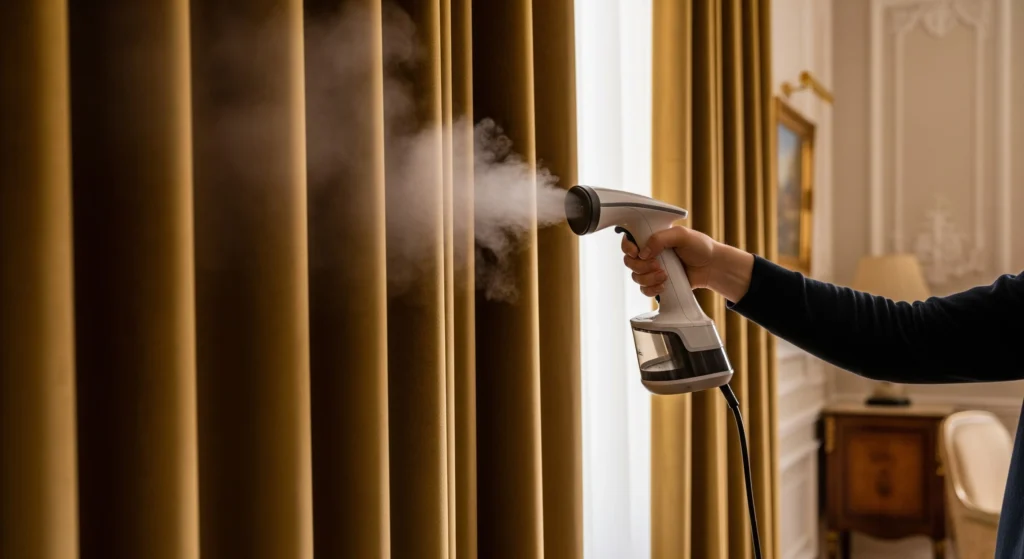
4. Mould Prevention & Treatment: The Monsoon Enemy
Mould is the single biggest threat to curtains during Pune’s monsoon season. Understanding what causes it and how to prevent it will save your curtains year after year.
What Causes Mould on Curtains in Pune?
- Curtains staying damp for more than 24 hours in a row.
- Poor room ventilation — especially common in single-window rooms.
- Curtains touching or nearly touching condensation-covered window glass.
- Washing curtains and rehanging before they are fully dry.
- Storing curtains slightly damp (most common cause of severe mould).
- Heavy natural fabrics (cotton, linen, jute) retaining moisture deep in fibres.
Mould Prevention: 7 Rules for Pune Monsoon
- Never rehang curtains until they are 100% dry — not just surface-dry.
- Keep ceiling fans running at low speed in rooms with fabric curtains during humid days.
- Ensure curtain hems are at least 1–2 cm above the floor to prevent wicking moisture from the ground.
- Leave a 5–10 cm gap between curtains and window glass to prevent condensation transfer.
- After rain splash, always blot dry and allow curtains to air completely before closing them.
- Use a small electric dehumidifier in rooms with persistent dampness issues.
- Add natural mould inhibitors: sachets of activated charcoal or silica gel near curtain bases absorb excess room moisture.
Treating Mould Spots: Step-by-Step
If you discover mould spots on your curtains, act immediately. Here is the correct treatment for different levels of mould:
Minor Mould (Small spots, caught early)
- Take the curtain down immediately.
- Take it outdoors (do not brush mould spores inside your home).
- Mix equal parts white vinegar and water in a spray bottle.
- Spray the mouldy area generously and let it sit for 15–20 minutes.
- Scrub gently with a soft brush.
- Machine wash on the hottest setting safe for that fabric.
- Dry completely in sunlight before rehanging.
Moderate Mould (Spreading patches)
- Follow the vinegar treatment above.
- If the fabric is white or very light, a diluted oxygen bleach solution (not chlorine bleach) can be used.
- For coloured fabrics, use a commercial anti-mould fabric treatment (available at most Pune home care stores).
- Wash at the highest safe temperature for that fabric.
- If the smell persists after washing, add half a cup of baking soda to the wash cycle.
Severe Mould (Large areas, deep penetration)
⚠️ Severe Mould Warning: If mould has penetrated deeply into the fabric fibres and covers a large area, the curtain may not be salvageable. Attempting to wash severely moulded curtains at home can spread spores to your washing machine. Consider professional cleaning or replacement. Pune Decor can help you find the right replacement quickly.
Natural Mould Inhibitors for Monsoon
- White vinegar: Natural antifungal. Add to rinse cycle during every monsoon wash.
- Neem oil: A few drops in wash water acts as a natural anti-fungal and insect repellent.
- Tea tree oil: 10 drops in a spray bottle of water — light mist on curtains after washing.
- Activated charcoal sachets: Place near curtain base to absorb room humidity.
- Silica gel packs: Place on windowsills to reduce localised humidity near curtains.
💡 Pro Tip: After every monsoon wash, while the curtain is still slightly damp, lightly spray a 50:50 white vinegar and water solution. This leaves an anti-mould residue that helps protect the fabric between washes throughout the season.
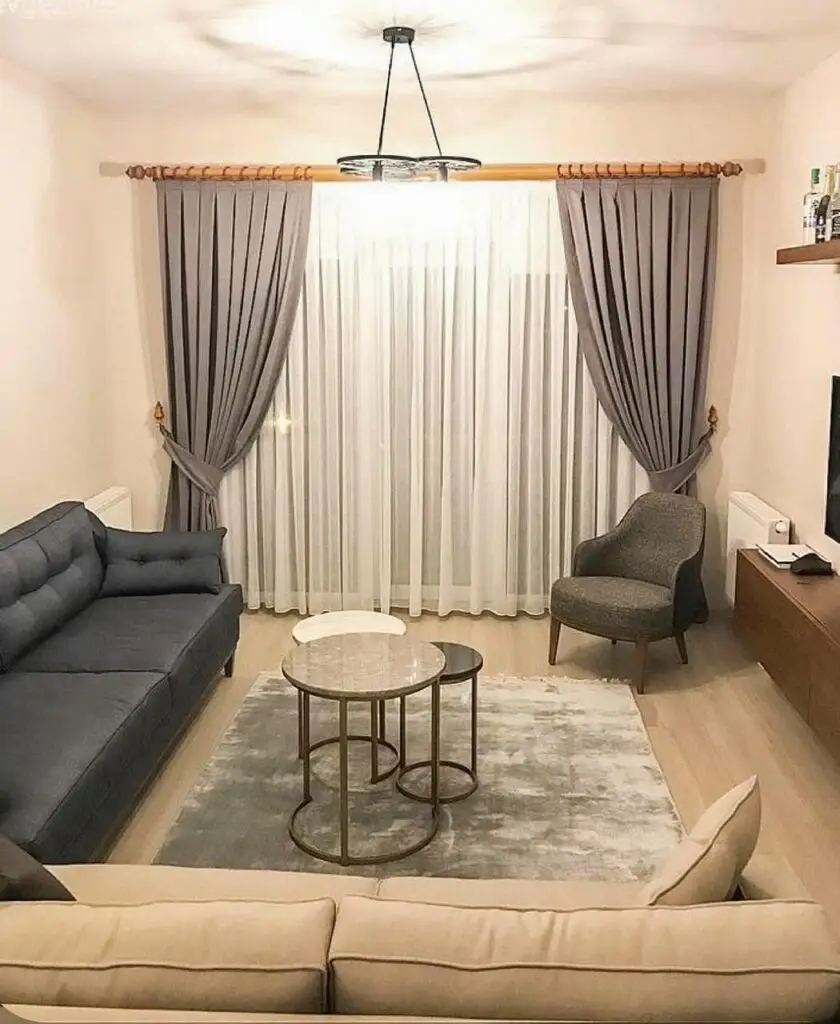
5. Monsoon Curtain Care Guide
Different rooms in your Pune home have different moisture levels and curtain care needs during monsoon. Here is a tailored guide:
🛋️ Living Room Curtains
Shake or vacuum curtains twice weekly — highest dust exposure in the home
Keep ceiling fan running at low speed to circulate air around curtains
Wash polyester or polycotton living room curtains every 4–6 weeks during monsoon
If curtains are near a frequently opened balcony door, check for rain splash weekly
Tie back curtains during heavy rain to keep them away from the open door
🛏️ Bedroom Curtains
Bedroom curtains face condensation from AC units and window glass — check edges weekly
Keep a small gap between curtains and window glass to prevent moisture transfer
Blackout curtains in bedrooms: wipe the back of the curtain with a dry cloth if condensation occurs
Wash bedroom curtains every 6–8 weeks during monsoon (lower exposure than living room)
After washing, dry completely before rehanging — slightly damp blackout curtains develop mould on the backing
🍳 Kitchen Curtains
Kitchen curtains face cooking moisture AND monsoon humidity — the highest-risk room
Wash kitchen curtains every 2–3 weeks during monsoon without exception
✔ Use short, cafe-style curtains in kitchens to keep hems away from splashing water
Wipe down curtain fabric with a damp cloth weekly to remove grease and moisture combination
Only use 100% polyester in kitchen — any natural fibre in a monsoon kitchen is high mould risk
🚰 Bathroom Curtains
Bathroom curtains (window curtains — not shower curtains) need washing every 2 weeks minimum
After each shower or bath, leave the bathroom window open for at least 30 minutes
Inspect the back of bathroom curtains every week for mould — it often forms on the back first
Use only polyester or moisture-rated synthetic fabrics in bathrooms during monsoon
If mould appears on bathroom curtains more than twice in a season, upgrade to vinyl blinds instead
🧸 Children’s Room Curtains
Children’s rooms often have windows that stay open longer — check for rain splash more frequently
Wash children’s room curtains every 3–4 weeks during monsoon
Choose machine-washable polyester prints that can be spot-cleaned quickly
Keep hems 2–3 cm above the floor to prevent moisture wicking from potentially damp floors
If the room has an AC, wipe curtain edges near the AC unit weekly for condensation buildup

6. Curtain Storage: For Fabrics You Swap Out in Monsoon
If you are following the best practice of swapping velvet, silk, jute, and thick cotton curtains before the monsoon, proper storage is critical. Curtains stored incorrectly — even for just four months — can emerge with irreversible mould damage.
How to Store Curtains Safely During Monsoon
- Wash thoroughly before storing: Every curtain must be completely clean before storage. Even invisible food residue or dust attracts mould in storage.
- Dry 100% in sunlight: Spread curtains flat in direct sunlight for at least 4–6 hours before folding. Even a tiny amount of residual moisture causes mould in storage.
- Press lightly with a cool iron: This removes creases and slightly heat-treats the fabric to kill any remaining mould spores.
- Fold neatly — do not compress tightly: Loosely fold curtains and wrap in a breathable cotton sheet or muslin cloth. Never use plastic bags — they trap moisture.
- Add mould inhibitors: Place 2–3 silica gel packs and a sachet of activated charcoal inside the cotton wrap before sealing.
- Store in a cool, dry location: An upper shelf in a well-ventilated wardrobe is ideal. Avoid under-bed storage during monsoon — floors are more humid than upper shelves.
- Check mid-season: If possible, take out stored curtains once in July–August to air them on a dry day and replace the silica gel packs.
- Label by room: Label each stored bundle so re-hanging in October is quick and hassle-free.
⚠️ Never store curtains in: Plastic covers or airtight bags • Cardboard boxes (absorb moisture) • Under-bed storage on ground floors • Near external walls that may seep • In damp cupboards without ventilation. Any of these will result in moulded, ruined curtains by October.
💡 Storage Hero Tip: Add 4–5 cloves to your storage bundle. Cloves are a natural anti-fungal and also deter fabric-eating insects. Your curtains will smell fresh and clean when you take them out in October.
7. After Monsoon: October Refresh Checklist
October marks the end of Pune’s monsoon and the perfect time to restore your home’s curtains to their full beauty. Here is your post-monsoon curtain revival checklist:
For Curtains That Were Up All Monsoon
- Give every curtain a thorough wash — the first post-monsoon wash is the most important one of the year.
- Inspect carefully for mould spots or areas that are stiffer than usual (early mould stiffens fabric).
- Clean curtain rods and brackets thoroughly — remove any rust buildup with a rust remover or replace if badly corroded.
- Check curtain hooks, rings, and eyelets for damage or rust.
- Treat fabric with an anti-mould preventative spray before rehanging for winter.
- Dry completely in the beautiful October Pune sunshine before rehanging.
For Curtains That Were Stored
- Air stored curtains in sunlight for at least 3–4 hours before rehanging.
- Check for any mould spots that may have developed despite proper storage.
- If mild musty smell is present: hang in sunlight for half a day, or run through a short wash cycle.
- Press lightly with a cool iron for a crisp, fresh look after months in storage.
- Inspect hooks and eyelets for any corrosion and replace as needed.
Post-Monsoon Curtain Upgrade — Is It Time?
Post-monsoon October is the most popular time for curtain replacement and upgrades in Pune. After four months of monsoon, many homeowners realise their curtains need updating — whether due to damage, fading, or simply wanting a fresh look for the festive season (Navratri, Diwali, and New Year’s all fall in this period).
🏠 Thinking of New Curtains? October is the best time to visit Pune Decor’s showroom for curtain upgrades. Our festive collection features new 2026 designs in moisture-resistant polyester, premium linen-look blends, and blackout options — all perfectly timed for the festive and winter season. Free measurement and installation consultation available.
8. Common Mistakes Pune Homeowners Make with Curtains in Monsoon
Avoiding these mistakes will save you significant time, money, and curtain damage:
- Leaving velvet or thick curtains up through the entire monsoon without extra care: These fabrics hold moisture and must be either replaced for the season or washed every 2 weeks minimum and dried thoroughly each time.
- Washing curtains and rehanging them still slightly damp: Even “dry enough” curtains will develop mould in a humid monsoon room within 48–72 hours. Always ensure curtains are fully dry before rehanging.
- Keeping curtains closed against window glass during rain: This allows condensation to transfer from the glass to the fabric. Leave a gap, or tie curtains back during heavy rain.
- Using harsh chemical cleaners on mould spots: Bleach on coloured curtains will remove colour along with mould. Always start with a white vinegar solution and work up from there.
- Ignoring the curtain rod: A rusting rod drips rust onto the curtain top and often through the eyelets. These rust stains are nearly impossible to remove. Check and replace rusting rods before monsoon.
- Washing curtains together with other laundry during monsoon: Mould spores from curtains can transfer to other fabrics. Wash curtains separately during monsoon, and clean the washing machine drum after.
- Storing seasonal curtains without drying them properly: This is the most common cause of destroyed curtains that homeowners discover in October. A few hours of sunlight drying before storage saves expensive curtains from being thrown away.
- Not checking the back of the curtain: Mould often starts on the back of curtains (the side against the wall or window) because that side has less airflow. Check the back weekly during monsoon.
9. Expert Recommendation
After 12+ years of helping Pune families care for their home furnishings through every monsoon, here is our expert summary:
🏆 The 3 Rules That Make the Biggest Difference:
1. Start every monsoon with clean, dry curtains. 2. Never rehang even slightly damp curtains. 3. Check the back of your curtains every week. These three habits alone prevent 80% of monsoon curtain damage.
Beyond these fundamentals, the most impactful thing you can do for your curtains long-term is to choose the right fabrics in the first place — moisture-resistant polyester or polycotton blends that handle Pune’s climate with minimal maintenance, and quality rust-proof hardware that does not damage your curtains over time.
At Pune Decor, we offer complete curtain solutions — from fabric selection and measurement to stitching, hardware, professional installation, and ongoing care guidance. Our team serves all areas across Pune including Wakad, Baner, Kharadi, Hinjawadi, Viman Nagar, Koregaon Park, Kalyani Nagar, Pimpri-Chinchwad, and Hadapsar. 📍 Visit our showroom or book a free home consultation — our experts will assess your current curtains and recommend the best care plan or upgrade for your Pune home.
Polyester and blackout curtains: every 4–6 weeks. Polycotton blends: every 3–4 weeks. Sheer voile curtains: every 2–3 weeks. Kitchen curtains: every 2–3 weeks. Bathroom curtains: every 2 weeks. Cotton blend curtains: every 2–3 weeks. Always wash more frequently if you notice any musty smell or visible moisture marks.
For early mould, spray a 50:50 white vinegar and water solution on the affected area. Leave for 15–20 minutes, scrub gently with a soft brush, then machine wash on the hottest setting safe for that fabric. Dry completely in sunlight. For more stubborn mould on light-coloured fabrics, an oxygen-based fabric bleach solution can be used. For severe mould covering large areas, professional cleaning or replacement is recommended.
For best results, yes. Velvet, jute, silk, and thick pure cotton curtains should be stored or replaced with polyester, polycotton, or linen-look polyester alternatives for the June–September period. These synthetic and blended fabrics resist moisture, dry quickly, and are much easier to clean. You can rehang your premium natural-fabric curtains in October.
The fastest drying method during monsoon is: wash the curtain, squeeze out excess water gently (do not wring), hang immediately on a curtain rod or a wide hanger, and run a ceiling fan on high underneath. Sheer polyester curtains can dry in 20–30 minutes this way. Heavier polycotton curtains take 2–3 hours. If there is any sunshine, hang near an open window that receives light. Avoid folding or bunching curtains while damp — always hang them spread wide for fastest drying.
Stainless steel is the best curtain rod material for Pune monsoon. It does not rust, requires minimal maintenance, and comes in a wide range of finishes to match any decor. Powder-coated aluminium is an excellent budget alternative. Avoid plain iron, galvanised metal that is not properly sealed, and cheap chrome-plated rods where the plating chips easily. Rust from rods stains curtain eyelets and the top of the curtain permanently.
Wash thoroughly and dry completely in sunlight (at least 4–6 hours). Wrap in a breathable cotton sheet or muslin — never plastic. Place 2–3 silica gel packs inside the wrap. Add a small sachet of activated charcoal or a few cloves as natural mould and insect deterrents. Store on an upper shelf in a well-ventilated wardrobe. Check once mid-season (July–August) and replace silica gel packs. Remove and air in October sunshine before rehanging.
A musty smell without visible mould indicates early mould growth within the fabric fibres. Take the curtain down immediately. Sprinkle baking soda over both sides of the curtain and leave for 30 minutes to absorb odour. Shake off and then machine wash with your regular detergent plus half a cup of white vinegar in the rinse cycle. Dry completely in sunlight. If the smell persists after washing, repeat the wash with an oxygen-based fabric freshener. Persistent musty smell that doesn’t respond to two washes may indicate deep mould requiring professional treatment.
Yes. Pune Decor provides complete curtain services — from expert care advice and fabric consultation to new curtain supply, measurement, stitching, hardware, and professional installation. Our team serves all major areas in Pune including Wakad, Baner, Kharadi, Hinjawadi, Viman Nagar, Koregaon Park, Kalyani Nagar, Pimpri-Chinchwad, Hadapsar, Deccan, Kothrud, and all surrounding areas. Book a free home consultation or visit our Pune showroom
Conclusion: A Little Care Goes a Long Way
Pune’s monsoon is beautiful. The green hills, the cool breeze, the sound of rain on your windows — there is nothing quite like it. But without some simple, consistent care, it can also be the season that quietly destroys your curtains.
The good news is that protecting your curtains during Pune monsoon is not complicated. Wash them on schedule. Dry them completely before rehanging. Store seasonal fabrics properly. Check the back weekly for early mould. Replace iron rods with stainless steel. These five habits alone will keep your curtains fresh, beautiful, and long-lasting through every monsoon season.
And when you are ready to upgrade — whether it is to a more monsoon-friendly fabric, a fresh design for the festive season, or a complete living room refresh — Pune Decor is here to help.
☔ Monsoon-Proof Your Curtains with Pune Decor ☔
Visit our showroom for 200+ monsoon-ready curtain designs
Book a free home consultation — we come to you across all of Pune
WhatsApp us for a quick curtain care or replacement recommendation
Pune Decor | Premium Furnishing Solutions | www.punedecor.co.in
Proudly powered by WordPress